



Private equity’s comeback may be just around the corner, TPG Capital’s leadership says. While there’s no shortage of challenges to monitor, the team is “constructive on the next 12 months as it relates to levels of private equity activity,” co-managing partner Nehal Raj tells Buyouts.
But the shape of activity is likely to be different from what the private equity industry has come to know. “When TPG was founded – the LBO was innovative. And today, in this incredibly competitive environment, that is as common as dirt,” co-managing partner John Schilling says.
To create alpha, GPs won’t be able to rely on traditionally prized techniques. “Sector expertise, thematic expertise allows you to drive insights to compete, but it’s not enough to drive differentiated returns sustainably. It alone will over time probably cause a reversion to the mean,” Schilling says.
TPG Capital has been highly active this year, doing deals like the Hologic take-private with Blackstone and the Sabre Hospitality Solutions carve-out. Such investing is a product of a growth-oriented strategy of partnering with corporates and management teams in sectors like healthcare and tech – activity that often takes it into the customized side of the market.
In a Buyouts interview, Raj, Schilling and fellow co-managing partner Jeff Rhodes discuss their take on the market, opportunities in carve-outs and corporate partnerships, AI’s promise and risks, and why an intense focus on operations is a key competitive
differentiator.
What is TPG’s view of the deal market?
Nehal Raj: It feels like the deal market is thawing. We all went into 2025 with optimism for dealflow and that really didn’t come through in a big way because of uncertainty related to geopolitical and macroeconomic factors.
“I like the phrase cautiously optimistic. It stands to reason it’ll be a relatively strong year for dealmaking and exits, both of which the industry needs – especially exits”
Nehal Raj, TPG Capital


Personally, I’m pretty constructive on the next 12 months as it relates to levels of private equity activity. Lower interest rates will be supportive of deals and valuations. We’re seeing significant AI tailwinds. There’s a lot of pent-up demand, both on the buy-side needing to put capital to work, and on the sell-side needing to generate DPI and exits.
You never know what may come out of left field, but based on what we know right now, I think it’s looking positive.
Jeff Rhodes: I agree. Deal markets can thrive through adversity. What they can’t thrive through is uncertainty. And there was, starting with Liberation Day [President Trump’s initial announcement of a broad tariff policy], a period of high uncertainty: uncertainty about the near-term earnings profile of businesses, about inflation and rates – and therefore cost of capital.
While we don’t have a full picture of how tariffs will emerge or exactly where rates will go, we now have a better ability to bound it. With the reduction in uncertainty you’re starting to see more deal activity, despite some continuing challenges in the economy.
For us, this creates opportunities to engage with large corporates more willing to work with private equity partners. And also to invest in high-quality assets, where the long-term secular growth could outweigh some near-term volatility.
John Schilling: An area where there’s both opportunity and risk is AI. As people come to terms with the nature of AI opportunities in front of them, as well as the risks, there’s probably going to be an amplification of the winners and losers.
In the last two years or so, people were just coming to grips with what AI meant for their businesses. While we’re still in the early innings, we’re now starting to see the strategies and approaches companies are taking.
What macro headwinds should GPs keep an eye on?
JR: We should be keeping our eye on concerns around the labor market and inflation not staying in a target zone and what that could do to rates and the deal environment. But the most likely scenario, at least in the near-term, would not be a return of creeping inflation.
While there’s not a globalized inflation concern the way there was in 2022-23, you still need to be careful about that on a market-by-market basis.
Should we be optimistic about a full rebound in 2026?
NR: I like the phrase cautiously optimistic. It stands to reason it’ll be a relatively strong year for dealmaking and exits, both of which the industry needs – especially exits. But the cautious part is continued geopolitical uncertainty you just can’t predict.
$67bn
Amount TPG Capital has invested since 1993
And as John pointed out, the magnitude of AI’s impact – given how rapid this technology is advancing – that’s also hard to predict. Against optimism, you need to be balanced and cognizant of the risk factors.
JR: Based on what we are able to anticipate sitting here today, I agree. That being said, if you think back over the last five years, all the major determinative factors influencing levels of deal activity were things that almost no one anticipated. The global pandemic. After-effects in terms of supply chains and inflation in 2022-23. Liberation Day.
We’ve learned to incorporate the available information, but also to develop a strategy from an investment perspective that incorporates the unanticipated. This is the world we’ve been living in for some period of time now.
When will the backlog of unrealized assets come to market?
NR: There were few exits last year. The companies that did sell were the very best and had little exposure to AI, tariff or inflation risk. And they went for premium prices. The rest of the iceberg under the surface consists of the other 90 percent of businesses that needed to sell but weren’t selling.
Over the next 12 months, we’ll see some of that iceberg start to melt for two reasons. First, the valuation environment is more constructive, which should narrow the bid-ask gap. Second, sellers are one year further into their hold periods and the level of anxiousness to part with assets and drive DPI is going to be that much higher.
I don’t think the whole iceberg goes away in the next 12 months but, as an industry, we’ll probably start chipping away at it. It should be, from an exit and DPI standpoint, a good next 12 months. That’ll be much needed. LPs need the capital back. And it’ll be helpful for new fundraising to have DPI flowing again.
JS: I agree. With a more accommodating rate environment, a less uncertain macro market, opportunities for those companies that had paused are now re-emerging and we expect that’s going to persist.
$64bn
TPG Capital’s assets under management
In addition to GPs looking for exits, we should consider how strategics – or corporates – are viewing the market. As uncertainty begins to abate, they’re also thinking about their portfolios, about how they want to shape their strategies going forward. A big part of the opportunity, certainly from our vantage point, is resolving how to partner with corporates and support them.
Do GPs need to continue being creative about exits?
JS: Continuation vehicles and fund of fund transfers have emerged as a preferred path for a broad array of GPs. It’s unlikely they’re going to disappear because people recognize their viability.
We have not used those as actively as others have. The majority of our exits have been to strategic buyers. This comes from an approach we’ve set forth over the last decade, which is to build businesses that are strategically important to leaders in the segments where they’re competing.
If you do that, if you build companies that are going to be leaders in those spaces – that have technologies and capabilities the strategics want to acquire – the exit path can be much more straightforward.
JR: Some of the more traditional markets for private equity exits are starting to open up. IPOs, private market transactions, corporates – all seem to be leaning in a bit more.
“Deal markets can thrive through adversity. What they can’t thrive through is uncertainty”
Jeff Rhodes, TPG Capital
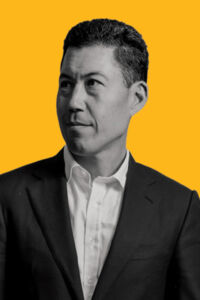
Private equity’s history is one of innovation, of evolution. New market developments, such as secondaries or continuation vehicles – or other ways GPs and LPs come together to create liquidity and drive value – usually become part of the option set. Unless something happens to make people question their efficacy, which we haven’t seen.
How you decide amongst different exit channels depends a lot on the dialogue you’re having with LPs, what they’d like to be seeing, the nature of the asset and the options in front of you.
How do you typically monetize portfolio investments?
JR: We focus on secularly growing end-markets with business models that lend themselves to recurring revenue and assets that can be increasingly important to their ecosystem of partners and customers. And companies that lend themselves to the building skills we’ve developed over nearly four decades.
When you get it right, what you have in the end is a pretty strategic asset. It’s a business that has cultivated relationships with large corporates. So, it becomes natural for some of those corporates to look at the capabilities that have been developed and see them as important for the growth they’re trying to drive.
Most large public businesses don’t just shut down M&A during a down-cycle or a time of high interest rates. Many view these periods as an opportunity to acquire assets without all the capital market activities they may need to compete with in times of expansion.
JS: The majority of our investments are corporate partnerships. We want to understand the nature of the opportunities corporates see as well as the challenges they’re facing. And we try to work in partnership with them to creatively solve problems.
As a result of this, two things happen: one is we have a clear understanding of the types of companies that strategics are interested in buying. We’re also creating prospective partnerships that include innovative put-call structures that have guaranteed exits. It’s an architecture that supports both sides.
How has your strategy evolved in a competitive market?
NR: We focus on driving growth-oriented transformations. This means investing in our five core sectors, and themes within those sectors, where we see strong secular growth – often double-digit growth. Transformational investing, in its simplest form, involves taking a business from good to great.We see the biggest opportunities to drive transformations today in carve-outs. We also see this in corporate partnerships.
Our approach has evolved along with the private equity market. When I joined the firm 20 years ago, we did carve-outs, we did transformational deals. But the strategy was more generalized. As the industry has matured, the need for deep, intense sector specialization has only increased.
As we tend to emphasize transformational deal types, our headcount within TPG Capital has become more ops-oriented. About half of our senior headcount are operating professionals, which we think is quite unique.
JS: If you think about private equity’s long arc – say, when TPG was founded – the LBO was innovative. And today, in this incredibly competitive environment, that is as common as dirt. So, the question is, “How do you differentiate in a sustainable way?”
It’s harder and harder to just be a good stock picker. Sector expertise, thematic expertise allows you to drive insights to compete, but it’s not enough to drive differentiated returns sustainably. It alone will over time probably cause a reversion to the mean.
“We’re looking for opportunities to invest in businesses that both improve the quality of care and lower the net cost of care”
John Schilling, TPG Capital

Our model integrates deal and operational leaders into each of the sector teams, bringing together historical investment, financial and operating expertise. This model allows you to benefit from different points of view on the same problem.
We’ve coupled this with capabilities to execute operational transformation. These capabilities take time and resources to develop, but once you have them, you’re able to drive real value in a variety of climates and settings.
Does your approach support a steady investment pace?
JR: We’ve been able to remain active in slow periods because we’ve developed capabilities that hone our sourcing toward customized areas of the market, which don’t rely on bank-led processes or options, and are more oriented to problem-solving. Such transactions occur just as often, and sometimes more often, during periods of limited deal activity and economic challenges. We’re not trying to time the market – it’s more that we spend years developing relationships and perspectives on sectors and this allows us to be a problem-solving partner to corporates and management teams.
It just so happens that, after years of dialogue, the opportunity can arise when there are a few other deals taking place. We’ve seen this on multiple occasions, most notably in 2023.
What tech opportunities is TPG focusing on right now?
NR: We play on two sides of the tech market: software and enterprise technology, which is more of a B2B strategy – with a big emphasis on enterprise software – and internet and digital media, which is more of a consumer-oriented, B2C strategy. One thing evolving our space is AI and its creation of winners and losers.
30
Number of TPG’s offices worldwide
We’ve doubled down on a couple of areas we’re excited about in the context of AI. One we’re watching is vertical market software and data. Vertical-specific software companies often sit on data that is highly monetizable in a world of AI proliferation, making them more insulated from AI threats.
We’re also seeing net AI tailwinds in cybersecurity. As we all access more artificial intelligence from inside our corporate networks, from our personal devices, we’re creating more cyber-threats for everyone. There’s going to be a new architecture needed to protect against those threats, and that’s creating a lot of opportunities.
And what is the opportunity set in healthcare?
JS: There’s a common thread running across all our healthcare investments: we’re looking for opportunities to invest in businesses that both improve the quality of care and lower the net cost of care in the US and global healthcare systems.
There are several ways to express this meta-theme. On the provider side, we focus on areas where you can align the interests of the payer, the physician and the patient, often in the context of an at-risk model. In the device space, we look for new technologies that will improve the quality and cost of care.
Healthcare substantially lags virtually every other sector of the economy in terms of its technology adoption. So, there’s an enormous opportunity to modernize the base of technology and drive value in the process. In addition, we’re supporting new and innovative pharmaceutical therapies, often in the context of pharma services as well as pharmaceutical products.
What was behind last year’s expansion of the leadership team?
NR: Adding John as a co-managing partner was a very intentional and strategic decision. While he has led deals, his background is primarily on the operations side of our business, whereas Jeff and I are primarily on the investing side.
As we’ve noted, our strategy has become more and more transformation-oriented, which means we’re driving lots of operational change in the portfolio. Adding someone with John’s expertise and background made sense because it’s aligned with the direction of our strategy. It’ll position us well going forward.
Also, dividing the job into three portions allows each of us to continue doing what we like best: investing in new companies and managing our portfolio. None of us want to be an administrator solely. We want to stay on boards and, from time to time, lead new deals. That’s what our LPs want from us too.
Lacrosse, soccer and Radiohead
Sports and music are an added bond for the TPG trio
Running the $64 billion TPG Capital, one of world’s largest private equity businesses, involves long hours.
But the three co-managing partners, while having diverse backgrounds, share things in common that help them to relax, and strengthen their camaraderie.
One of those things is “a deep and abiding interest in sports,” John Schilling tells Buyouts.
Schilling’s foremost passion is lacrosse and racket sports. A Marylander who trained at Johns Hopkins to become a surgeon, and was an Abbott Laboratories executive before joining TPG, he and his family not only play together but also take in tennis matches.
Jeff Rhodes agrees with Schilling: “All three of us are competitive people. One way we like to express that is through good-natured competition in sports. This love of sports, of respect for giving it your all and seeing how far you can go with it, is something that brings us together.”
Growing up in Saint Paul, Minnesota, Rhodes was drawn to cross-country ski racing, which he continues to enjoy with his family. Describing his journey from McKinsey & Company and a start-up to private equity as “atypical,” he is also an avid golfer.
Nehal Raj, who grew up in Los Angeles, is enthusiastic about US sports, particularly basketball. He also shares with Rhodes “a love of English soccer, of all things.
“Those matches are typically on Saturday or Sunday mornings.Without fail during soccer season, which is most of the year, there’ll be some text thread with Jeff about how our favorite team is doing.”
That team, by the way, is the Premier League’s Leeds United Football Club.
Raj and Schilling are fans of the rock band Radiohead, currently on tour in Europe. “We’re excited about the potential for them to tour in the US next year,” Raj says.
link