Porsche Marketing Strategy (2025)
Porsche has built its reputation not only on engineering excellence but also on a carefully crafted marketing approach that strengthens its position as a luxury performance brand. The Porsche marketing strategy focuses on exclusivity, innovation, and emotional connection, ensuring its cars represent more than transportation—they symbolize status and lifestyle. This balance of heritage and modern engagement sets Porsche apart in a competitive automotive market.
The brand integrates traditional campaigns with digital initiatives, using social media, influencer partnerships, and experiential events to connect with its audience. By aligning with its long-term vision outlined in the Porsche Strategy 2030 Plus, the company emphasizes sustainability, customer experience, and technological transformation while maintaining its iconic identity.
Anyone exploring how Porsche markets itself will gain insight into its goals, target audience, and the marketing mix that drives its success. From the channels it leverages to the way it applies value-over-volume thinking, Porsche provides a roadmap for businesses aiming to elevate their own brand strategies.
Porsche Goals And Objectives
Porsche defines its long-term direction through clear goals that align with both its business strategy and its marketing approach. The company focuses on customers, products, sustainability, and transformation as the four pillars of its Strategy 2030 Plus.
These objectives extend beyond sales growth. Porsche aims to balance profitability with environmental responsibility, positioning itself as a leader in sustainable performance within the automotive industry.
Key objectives include:
- Brand Strength: Maintain high brand recall in the luxury and performance segment.
- Customer Growth: Expand its customer base by attracting younger buyers and more women, as noted in its marketing initiatives.
- Innovation: Increase investment in electrification and digital services.
- Sustainability: Commit to reducing CO₂ emissions across the value chain.
Porsche also sets goals across stakeholder groups—customers, society, employees, and investors—according to its 2030 goals framework. This ensures that its marketing strategy aligns with broader corporate responsibilities.
The company uses measurable targets to track progress. For example:
| Area | Objective |
| Market presence | Expand share in premium automotive markets |
| Financial growth | Achieve sustainable revenue and profit goals |
| Innovation focus | Lead in electric mobility and digitalization |
| Customer profile | Broaden demographics of Porsche ownership |
By aligning its marketing strategy with these objectives, Porsche strengthens its position in the competitive automotive industry while preparing for long-term transformation.
Who Is Porsche’s Target Audience?
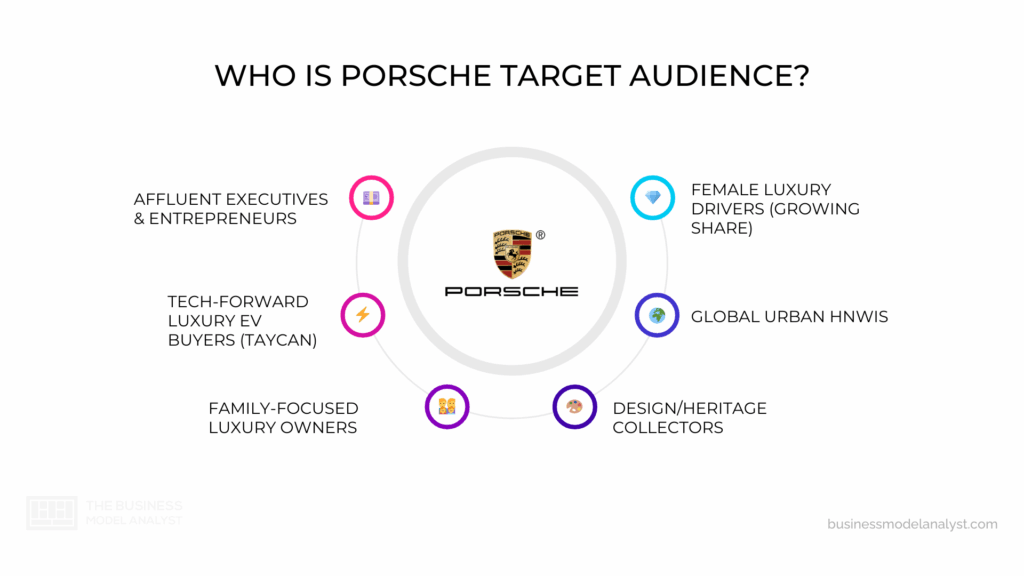
Porsche appeals to affluent consumers who value performance, design, and exclusivity. The brand attracts buyers across sports cars, SUVs, and luxury sedans, with each segment reflecting different lifestyle and status-driven motivations.
Porsche Demographics
Porsche’s customer base primarily consists of high-income individuals, often professionals, executives, and entrepreneurs. The brand positions itself within the luxury car market, making affordability a key barrier that naturally narrows the audience.
Age plays a significant role. Buyers often fall between 30 and 60 years old, with younger professionals leaning toward entry-level sports cars like the 718, while older buyers favor SUVs such as the Cayenne and Macan.
Gender distribution skews male, though female ownership has grown with the popularity of SUVs. Education and income levels are typically above average, reflecting a lifestyle centered on financial stability and premium consumption.
Porsche Psychographics
Porsche owners often identify as luxury car enthusiasts who value precision engineering and brand heritage. They see their vehicles not only as transportation but as symbols of achievement and taste.
Many prioritize performance, aligning with the sports car market segment. Driving dynamics, speed, and handling remain central motivations, especially for 911 buyers. At the same time, SUV customers emphasize comfort, versatility, and family use without sacrificing prestige.
Lifestyle choices also influence purchasing. Owners often seek exclusivity, gravitate toward high-end experiences, and value design aesthetics. They prefer brands that align with their identity, making Porsche’s consistent image of innovation and tradition appealing.
Porsche Geography
Porsche’s strongest markets are in Europe, North America, and Asia. Germany remains the home base, but the United States is a leading market for both sports cars and SUVs. China has also become a critical growth region, especially for luxury SUVs.
Urban centers dominate Porsche’s geographic footprint. Cities with high concentrations of wealth, such as Los Angeles, London, and Shanghai, drive sales. These areas provide both the income base and cultural interest in premium vehicles.
Emerging markets in the Middle East and parts of Southeast Asia also show increasing demand. In these regions, luxury cars serve as both status symbols and practical investments, further expanding Porsche’s global audience.
Porsche Behavior
Porsche buyers demonstrate strong brand loyalty. Many upgrade within the lineup, moving from an entry-level model to higher-performance or more luxurious variants. Repeat purchases are common, especially among long-term enthusiasts.
Purchase behavior often reflects lifestyle needs. For example:
- Sports car buyers emphasize performance and exclusivity.
- SUV buyers prioritize practicality while retaining luxury and brand prestige.
Digital engagement also influences behavior. Prospective buyers research extensively online, and Porsche invests heavily in SEO and SEM strategies to capture this interest. Owners also engage with Porsche clubs and branded experiences, reinforcing a sense of community and belonging.
Marketing Mix Of Porsche
Porsche positions itself as a premium automotive brand by combining engineering precision with luxury appeal. Its approach integrates high-performance vehicles, selective pricing strategies, exclusive distribution, and carefully crafted promotional campaigns to sustain its reputation for innovation and exclusivity.
Porsche Product
Porsche vehicles emphasize performance, design, and advanced technology. The brand’s lineup includes iconic models such as the Porsche 911, practical SUVs like the Cayenne and Macan, luxury sedans such as the Panamera, and roadsters like the Boxster.
In recent years, Porsche expanded its portfolio with the Taycan, an all-electric sports car that reflects its commitment to sustainability while maintaining driving performance. This addition highlights the company’s ability to innovate without compromising its core identity.
Porsche product strategy focuses on balancing tradition with modern demands. Each model combines luxury interiors, advanced safety systems, and customizable features. Customers can personalize colors, materials, and technology packages, reinforcing exclusivity and customer satisfaction.
Porsche Price
Porsche applies a price skimming strategy for new launches, setting high initial prices to capture early adopters. Over time, prices stabilize, but they remain premium compared to competitors. This approach reinforces its positioning as a luxury brand.
The company also uses psychological pricing by setting figures just below round numbers, such as $99,995 instead of $100,000. This method subtly influences perception while maintaining exclusivity.
Pricing varies by model and configuration. For example, the Macan serves as an entry-level SUV, while the 911 and Panamera target higher-income segments. The Taycan competes in the growing electric luxury market, priced to reflect both innovation and brand prestige.
Porsche Place
Porsche relies on a direct distribution channel through its global network of Porsche Centres. These dealerships are designed to provide premium customer experiences, from tailored consultations to after-sales services.
The brand carefully selects dealership locations in affluent urban areas to align with its target audience. Customers can also configure and order vehicles online, integrating digital convenience with physical showrooms.
In addition, Porsche operates exclusive delivery experiences at its factories in Germany, where buyers can collect their new cars directly. This reinforces customer loyalty and strengthens the emotional connection to the brand.
Porsche Promotion
Porsche promotion strategy combines traditional and digital channels. The company invests in print advertising, television campaigns, and sponsorship of motorsport events to highlight its engineering heritage.
Digital marketing plays a growing role. Porsche maintains strong engagement on platforms like Instagram, TikTok, and YouTube, where it showcases design features and behind-the-scenes content. This approach helps reach younger luxury buyers and builds brand awareness globally, as noted in Porsche’s social media marketing.
The brand also leverages influencer partnerships and experiential marketing. Test drive events, track days, and exclusive showcases allow potential customers to experience Porsche cars firsthand, reinforcing the performance-driven identity of the company.
What Are Porsche’s Strategies?
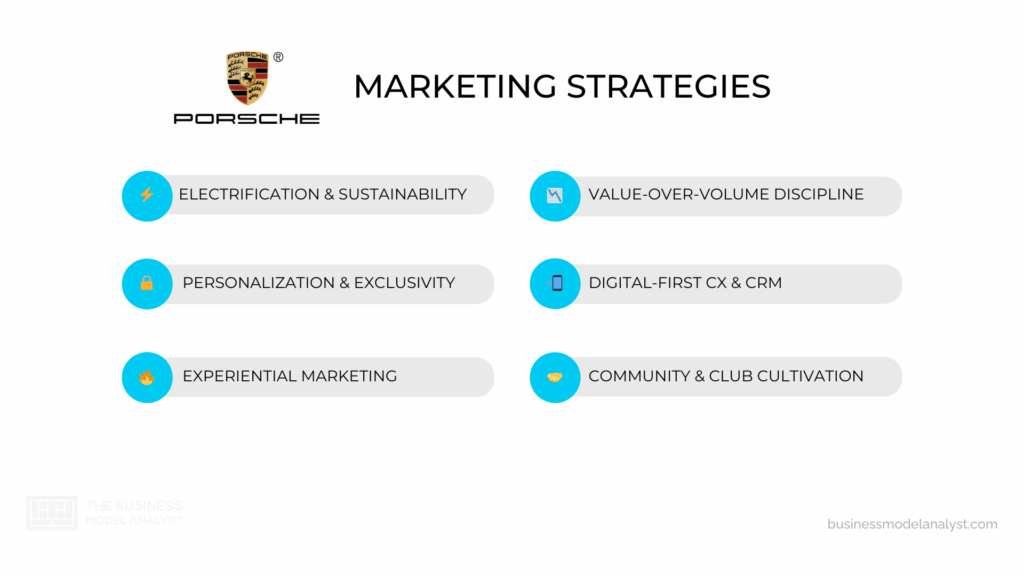
Porsche builds its marketing around a mix of heritage and innovation. The brand highlights its long motorsport history while promoting modern technologies such as electric drivetrains, advanced infotainment systems, and driver-assistance features. This balance reinforces the Porsche brand as both timeless and forward-looking.
A strong focus on performance remains central. Precision engineering, performance enhancements, and handling capabilities are emphasized in campaigns to communicate that every model delivers a true sports car experience. This message appeals to both traditional enthusiasts and new buyers.
Customization options play a key role in customer appeal. Porsche offers tailored interiors, exterior finishes, and performance packages, which strengthen customer loyalty by giving buyers a sense of ownership and individuality.
The company also invests in targeted marketing strategies. Efforts include reducing the average age of owners and increasing the number of female buyers, as noted in Porsche’s marketing approach. Campaigns often use digital, social, and traditional media to reach specific segments effectively.
Experiential marketing is another pillar. Porsche organizes driving experiences and events that allow customers to test vehicles in real-world conditions. These immersive activities create emotional connections and reinforce brand identity.
Nostalgia and heritage are woven into storytelling. References to iconic models and racing history remind customers of Porsche’s legacy while keeping attention on modern advancements.
| Strategy Area | Focus Elements |
| Performance | Precision engineering, enhancements |
| Customization | Interiors, finishes, packages |
| Technology | Infotainment, driver-assistance |
| Heritage & Nostalgia | Motorsport legacy, iconic models |
| Customer Engagement | Driving experiences, events |
By combining tradition with modern innovation, Porsche sustains its luxury image while adapting to evolving customer expectations.
Porsche Channels
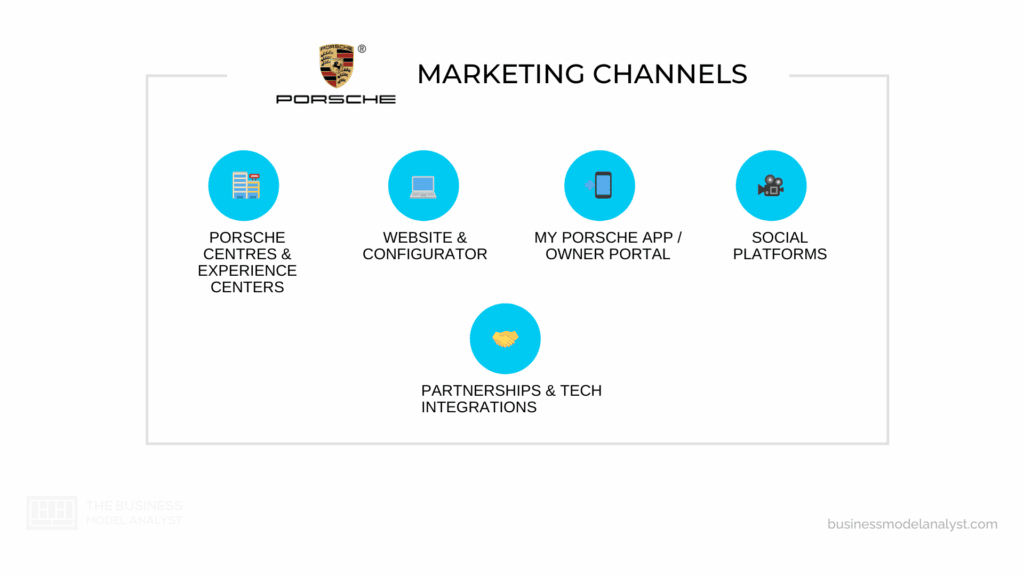
Porsche uses a mix of digital marketing and offline promotions to reach its audience. The company invests heavily in social media marketing across platforms like Instagram, YouTube, and Facebook to showcase performance, design, and customer stories. These channels allow Porsche to share interactive digital content and connect with younger, tech-savvy buyers.
Its advertising campaigns often combine traditional and digital elements. Porsche runs multimedia campaigns that highlight innovation and heritage, while also using brand ambassadors and influencers to strengthen credibility. This approach ensures consistent visibility across multiple markets.
Offline, Porsche emphasizes personal experiences. The Porsche World Roadshow and global car shows give potential customers direct access to vehicles in real-world settings. These events often include test drive experiences, which remain a central part of the brand’s promotional strategy.
Key channels can be summarized as follows:
| Channel Type | Examples |
| Digital Platforms | Social media, YouTube campaigns, interactive content, online advertising |
| Offline Promotion | Porsche World Roadshow, car shows, test drives, dealership events |
| Campaigns | Multimedia advertising, influencer partnerships, brand ambassador roles |
By combining digital marketing strategy with experiential offline promotion, Porsche maintains a strong presence across both online and physical spaces. This balance reinforces its image as a luxury performance brand while keeping customers engaged at multiple touchpoints.
For a detailed look at Porsche’s approach to social platforms, see this case study on Porsche’s marketing strategy.
How To Apply Porsche Strategies To Your Business
Businesses can adapt Porsche’s approach by focusing on customer-centric strategy. Porsche builds its plans around customer needs, products, sustainability, and transformation, as seen in its Strategy 2030 Plus. Companies in other industries can also align long-term goals with these four pillars.
A clear premium positioning helps Porsche maintain exclusivity. Any business can apply this by defining its value proposition and setting pricing that reflects quality. The Porsche pricing model shows how consistent premium pricing reinforces brand strength.
Digital marketing plays a central role. Porsche invests in social media, influencer collaborations, and online campaigns to engage audiences, as highlighted in this case study on Porsche’s marketing strategy. Smaller businesses can use similar tactics on a scale that matches their resources.
Key applications for businesses:
- Customer focus: Build strategies around detailed customer insights.
- Brand storytelling: Use digital platforms to share behind-the-scenes content.
- Consistent messaging: Ensure campaigns reflect the company’s core identity.
- Sustainability: Integrate environmental or social responsibility into operations.
| Porsche Principle | Business Application Example |
| Customer focus | Use surveys and data to refine services |
| Premium pricing | Position products at value-driven rates |
| Digital engagement | Run targeted social media campaigns |
| Sustainability | Adopt eco-friendly practices |
By applying these strategies, businesses can strengthen their brand identity and build lasting customer relationships.
Conclusion
Porsche continues to maintain its position as a premium automotive brand by blending tradition with innovation. The company balances its heritage, rooted in the vision of Ferdinand Porsche, with modern approaches that appeal to evolving consumer expectations.
The strategy highlights three consistent pillars:
- Luxury positioning that reinforces exclusivity
- Performance focus tied to engineering excellence
- Adaptation to modern trends such as electrification and digital engagement
Marketing efforts extend beyond traditional advertising. Porsche leverages social media, influencer partnerships, and experiential events to build strong connections with both existing and potential customers, as seen in its integrated campaigns.
A clear emphasis on personalization helps the brand stand out. Customers often experience tailored communication, exclusive previews, and opportunities to engage directly with the brand through events and test drives.
The company also demonstrates precise control of consumer demand and market positioning, which supports long-term profitability. Studies highlight that Porsche’s ability to adapt while staying consistent with its brand identity has been a key factor in its success (case study).
By combining heritage-driven storytelling with forward-looking strategies, Porsche strengthens its reputation as both a symbol of prestige and a leader in performance-driven innovation.
Frequently Asked Questions
Porsche emphasizes heritage, precision engineering, and exclusivity while also adapting to modern expectations of digital engagement, sustainability, and customer-focused innovation. The company combines traditional luxury branding with forward-looking strategies that resonate with both established and emerging audiences.
How does Porsche differentiate its brand in a competitive luxury automotive market?
Porsche sets itself apart by blending its racing heritage with luxury performance. The brand highlights craftsmanship, engineering precision, and exclusivity, positioning itself as both aspirational and functional. Its marketing underscores emotional connections through driving experiences and limited-edition models, which reinforce its unique identity in the luxury automotive landscape.
What role does innovation play in Porsche’s marketing campaigns?
Innovation serves as both a product and promotional driver. Campaigns often highlight cutting-edge technology, such as electric mobility and advanced driver assistance systems, to showcase progress without losing heritage appeal. Porsche uses storytelling to connect these innovations with its identity as a performance-driven brand, ensuring relevance in a rapidly evolving market.
How does Porsche integrate sustainability into its marketing strategy?
Sustainability messaging focuses on electric vehicle development, responsible manufacturing, and long-term environmental goals. Campaigns emphasize the balance between performance and reduced environmental impact, aligning with consumer expectations. By promoting sustainable practices, Porsche strengthens its reputation as a forward-looking luxury automaker.
What strategies does Porsche use to target its customer segments effectively?
Porsche employs a mix of exclusivity and personalization. It creates detailed customer profiles to tailor communications, ensuring messages resonate with high-net-worth individuals and aspirational buyers. Pricing strategies and limited editions reinforce exclusivity, while digital engagement broadens reach to younger, tech-savvy audiences.
How does Porsche leverage social media and digital marketing to engage with its audience?
The brand uses platforms like Instagram, YouTube, and TikTok to showcase vehicles, highlight events, and engage fans through interactive content. Porsche’s digital marketing emphasizes genuine engagement, with measurable fan interaction through likes, shares, and comments. According to BrandVM, social media plays a central role in connecting with both existing and potential customers.
What are the key elements of Porsche’s global marketing and advertising efforts?
Porsche combines traditional advertising with digital campaigns, influencer partnerships, and event sponsorships. Campaigns often highlight heritage while showcasing modern innovation, keeping the brand relevant across markets. As explained by Marketing Explainers, Porsche’s strategy blends legacy storytelling with technology-driven campaigns, ensuring consistent global appeal.
Philanthropy in marketing also plays a role, with Porsche supporting cultural, educational, and social initiatives. These efforts reinforce brand values and strengthen community connections while complementing broader promotional strategies.
link